Analyze real-time computer based Scada System Monitoring
Supervisory Control and Data Acquisition is abbreviated as SCADA. A computer-based Scada System Monitoring is used to collect and analyse real-time data to monitor and control equipment that deals with critical and time-sensitive events or materials. Since their inception in the 1960s, SCADA systems have become an essential part of virtually every manufacturing and industrial plant.
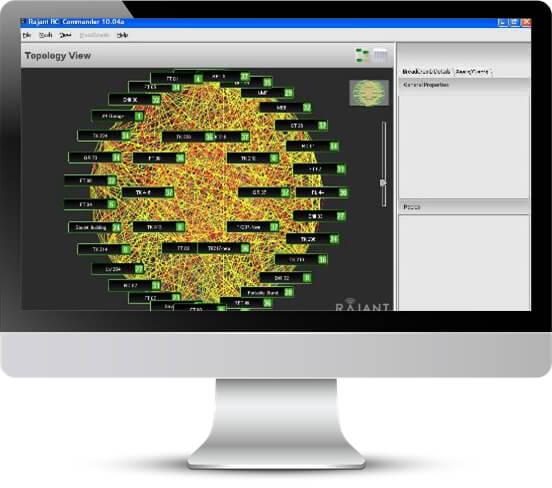
A typical SCADA system can be set up to keep an eye on a pipeline for a critical leak, and then, once a leak is found, it can use machines to carry out a chain of commands to either immediately close the valve to reduce or eliminate hazardous conditions, revenue loss, or production loss, or send a signal of the leak. Each SCADA system can be customised to fit a specific application perfectly. It can be extremely complex—a nuclear plant with a high budget—or relatively straightforward—a small office building with a low budget.
Automation is what makes Scada System Monitoring so important. It makes it possible for an organisation to meticulously study and anticipate the best response to measured conditions before automatically implementing those responses each time. Human error is virtually eliminated when equipment and processes are monitored using precise machine control. More importantly, it automates mundane, time-consuming, and routine tasks that were previously performed by humans. This improves real-time management of critical machine failures, reduces the likelihood of environmental disasters that can be controlled, and further boosts productivity.
Additionally, SCADA systems are required to monitor and control a significant geographic displacement that an organization may not be able to cover with sufficient personnel. Profitability therefore depends on these areas or sites' operability and reliable communication.
In order to reduce costs and increase reliability, numerous businesses are utilizing the most recent wireless communication technologies to replace a portion of their hardwired Scada System Monitoring infrastructures with wireless equipment. Wireless technologies enable the industry's home-based centralised location operation to receive live and historical data and provide remote and localised control at a cost-effective rate.
New production sites and facilities especially benefit from implementing a wireless infrastructure because installing wireless equipment can drastically cut installation time and costs, eliminate trenching and running conduit, and reduce wire failure due to degradation and other environmental factors. Again, using wireless technology eliminates the need for long-distance direct burial analog (4-20 mA) cabling, lowering the initial cost. I/O analogue-to-digital converter modules that are typically utilised in PLCs or RTUs' hardwired control instrumentation loops are also eliminated.Wireless Scada System


Comments
Post a Comment