Vhf Radio Signal Booster | Alliance Corporation
VHF radio signal booster For the past ten years, Electronics & Innovation has been designing and manufacturing robust RF power amplifiers. The frequency range of our very high frequency (VHF) and ultra high frequency (UHF) amplifiers is between 1 MHz and 500 MHz (with low power up to 1 GHz). Military communications, antenna testing, transmitters, AM/FM repeaters, and linear particle accelerators all make use of these VHF and UHF RF power amplifiers. These rack-mounted, aluminum-enclosed amplifiers are CE-marked and RoHS-compliant and are used for OEMs, industrial applications, and the research industries. RF power ranges from 1 to 1000 watts, with an input of 1 mW (0 dBm).
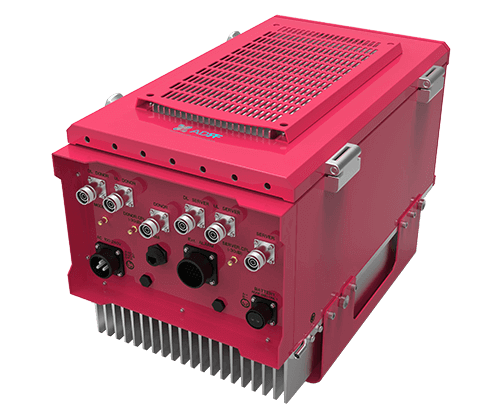
Vhf Radio Signal Booster is largely determined by your antenna's performance, which is influenced by three key parameters: length, height, and gain. The radio signal's strength and range increase with the gain (decibel rating). Mounting your antenna as high as possible, such as on top of your boat's hardtop or radar arch, can also increase distance. An antenna with a longer length and a larger radiating element can also provide greater range.
Also, keep in mind that not all Vhf Radio Signal Booster are the same. Their ability to "hear" weak and far-off stations, as well as filter out noise and interference, contributes to their maximum range in part.
Depending on the radio you use, the quality of your transmitted signal may vary. It is not difficult to produce a robust, sustained 25-watt output from better fixed-mount radios. Radios that aren't as expensive may struggle to produce more than 25 watts of power, which may even lose power over longer conversations.
For communication to take place, weak and distant signals must be received. If you are unable to hear the other party, there is no such thing as two-way communication, regardless of how powerful the transmitter on your radio is. A radio must have a sensitive "ear" that can amplify weak signals and cut out noise and interference from signals. This is typically found in marine VHFs of higher quality. Your communication range will be improved by using radios that have a selectivity figure of 75 dB or higher and a receiver sensitivity specification of less than 0.25 microvolts (uV). Radios with a more sensitive receiver will likely cost more.
Power and Installation The actual voltage delivered to your radio is determined by the state of your batteries and their charge. A crucial component in generating a strong signal is supplying your radio with 12 volts of power that is both solid and stable.
For antenna cable lengths greater than 20 feet, use coax cable with a low loss, like RG-8X. When pulling antenna cables through the boat during installation, avoid stress and sharp bends. Use an adapter with a 90-degree angle to connect the antenna if there isn't enough room behind your radio. UG-646, $10) to avoid giving the antenna cable a sharp bend.
Connectors without soldering I dislike using connectors without soldering for antennas. They outperform the soldered variety in terms of signal loss and failure, according to my findings. Consider the Digital Antenna 500 series VHF antennas, which range in length from 4 to 16 feet, if you are hesitant to attempt to solder on the radio's PL-259 antenna connector. They come with a connector that has already been assembled and has an outer shell that can be removed, leaving the centrepiece of the connector, which is slightly smaller than the cable itself. Passing the cable through a dash, panel, or wire way is made simpler by this.Uhf Vhf Antenna Booster
Visit boatingmag.com/how-to-solder-marine-vhf-radio-pl-259-connector for video instructions on how to install a PL-259 connector.


Comments
Post a Comment